
Actual Cash Value in Georgia: How Insurance Companies Determine Vehicle Value
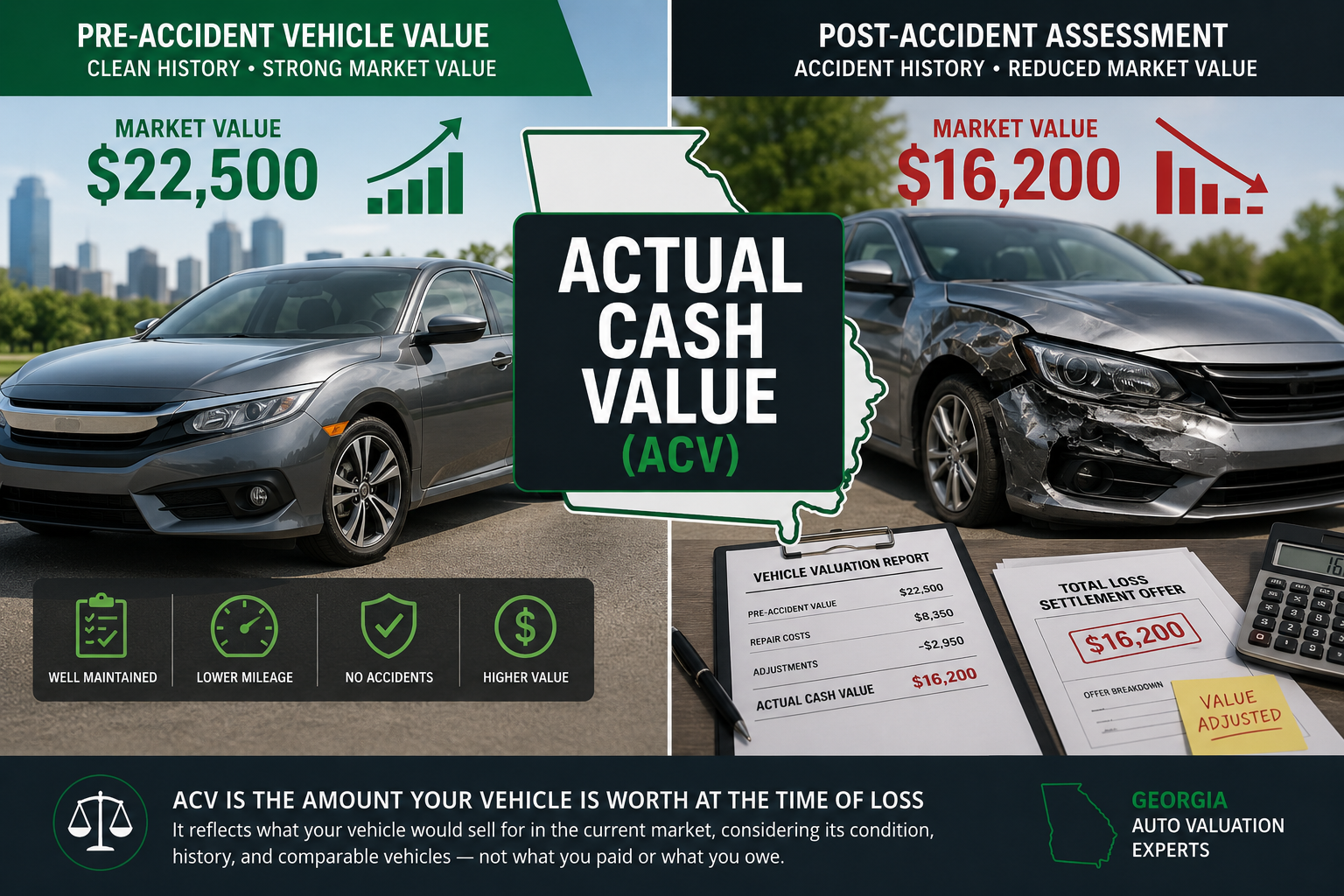
After a serious accident, one of the most important numbers in the claim process is the Actual Cash Value, often shortened to ACV.
Actual Cash Value is the amount an insurance company believes your vehicle was worth at the time of loss. In a total loss claim, that number often becomes the foundation for the settlement offer.
The problem is simple. If the ACV is wrong, the settlement offer is usually wrong too.
For drivers in Augusta, Central Georgia, Metro Atlanta, Athens, Gainesville, Rome, Ringgold, and surrounding areas, understanding ACV can help you recognize whether an insurance valuation is reasonable or whether important details may have been missed.
ACV is not the same as what you originally paid for the vehicle. It is not always the same as replacement cost either. It is supposed to reflect what your vehicle would reasonably sell for in the current market immediately before the loss, considering its year, make, model, mileage, condition, options, history, and local market demand.
Key point: ACV should be based on the vehicle you actually owned, not a lower-equipped version, weak comparable vehicles, or an incomplete valuation report.
How Insurance Companies Calculate Actual Cash Value
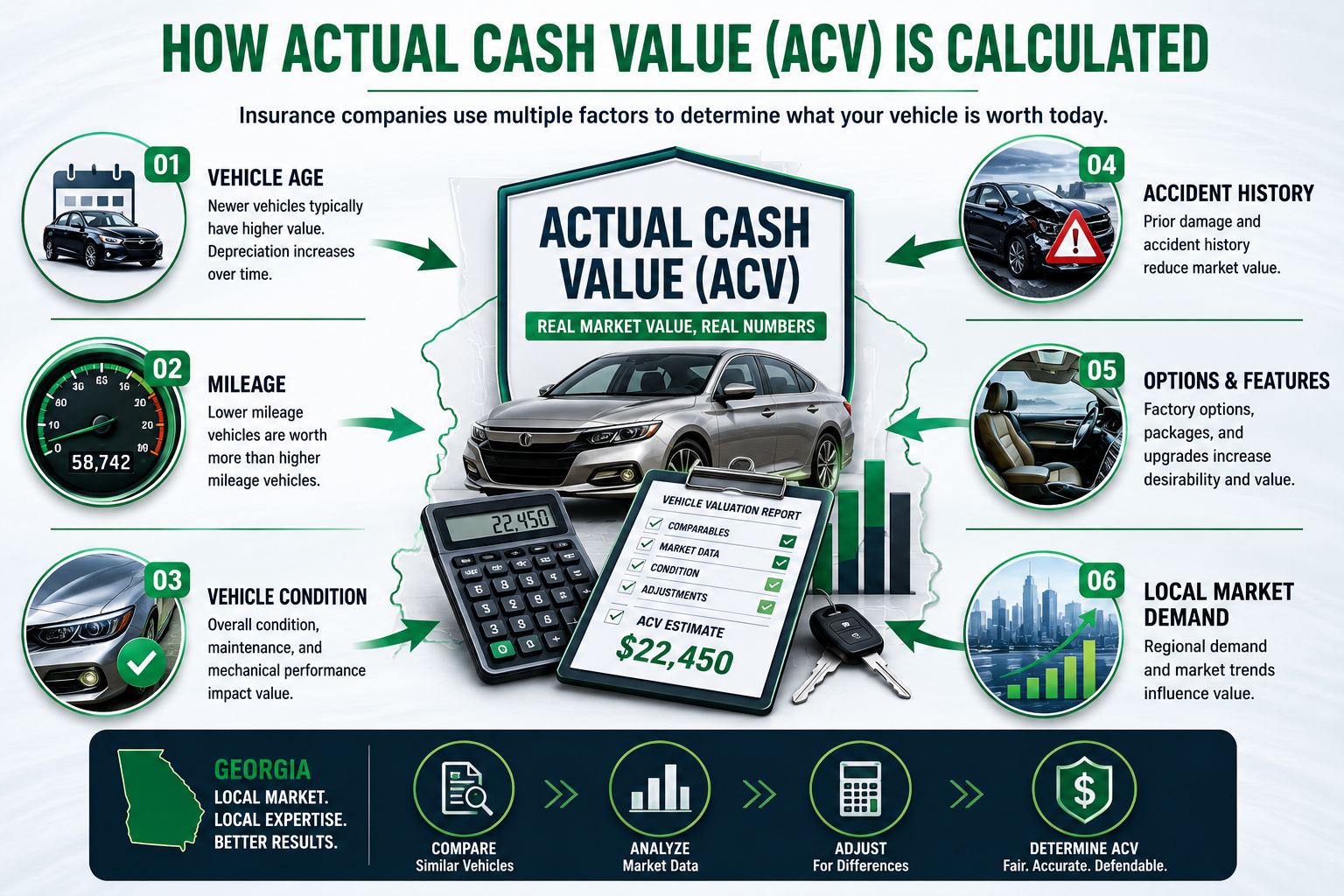
Insurance companies usually rely on valuation tools, databases, market listings, and comparable vehicles to calculate ACV. These systems are meant to create a consistent process, but they are only as accurate as the information entered into them.
A proper ACV review should consider the vehicle’s age, mileage, condition, factory options, trim package, accident history, and current local market conditions.
Comparable vehicles are especially important. If the report compares your vehicle to vehicles with fewer options, higher mileage, weaker condition, or a different trim level, the value can be pushed lower than it should be.
Georgia drivers often do not see the full valuation report at first. They may only see the final offer. Before accepting a total loss settlement, it is important to request the full report and review the details behind the number.
Common ACV factors include:
- Year, make, model, and trim level
- Mileage and usage history
- Factory options and added features
- Pre-loss condition
- Comparable vehicles used in the report
- Local market pricing across Georgia
- Prior damage or accident history
If your vehicle has been declared a total loss and the offer seems low, our related guide on Total Loss Offer Too Low in Georgia explains the most common valuation mistakes to look for before accepting a settlement.
Common ACV Mistakes That Can Reduce Your Settlement
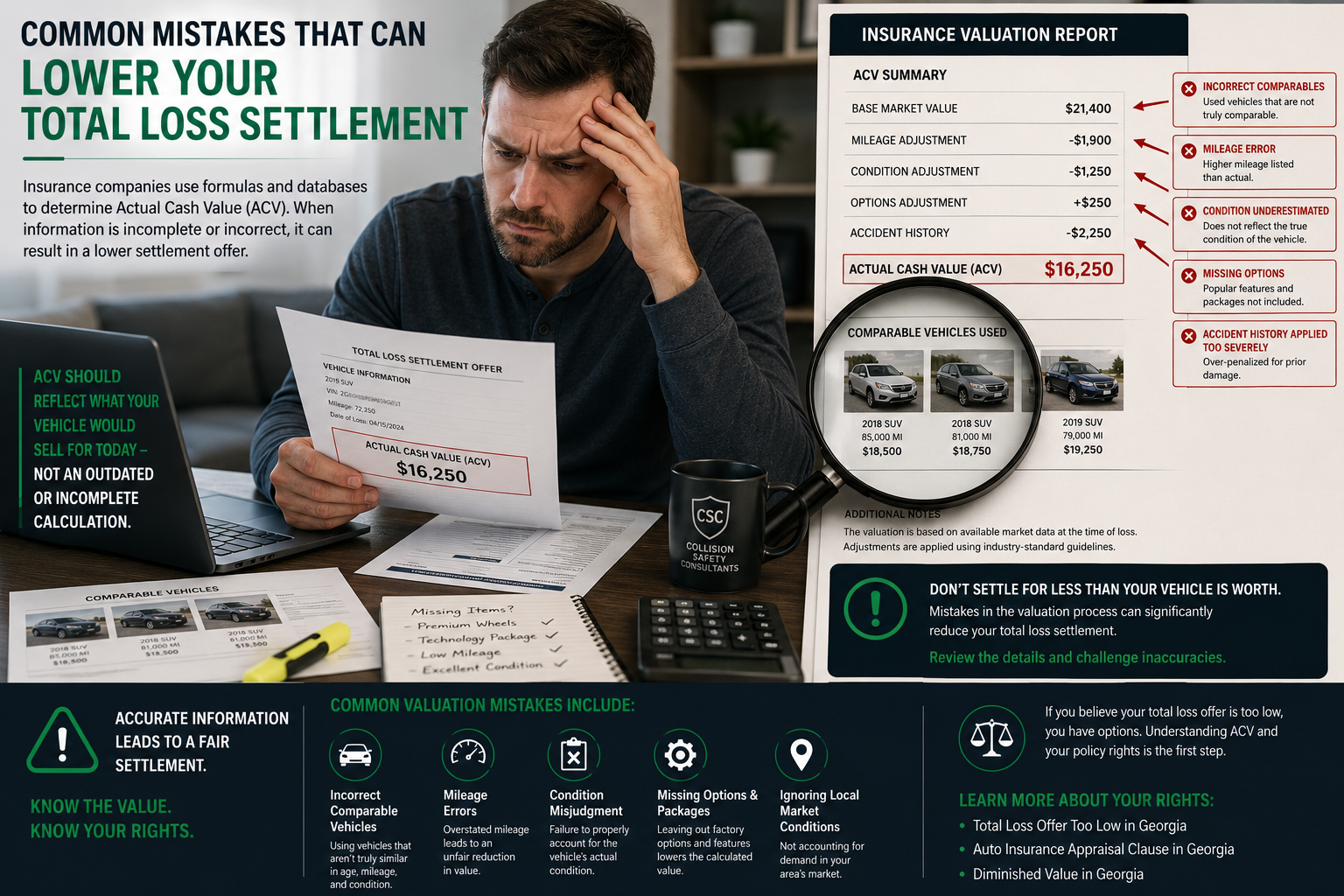
Many low settlement offers are not caused by one major error. They are often caused by several smaller mistakes that combine to reduce the final number.
A missing option package may reduce the value. A mileage error may reduce it again. A weak comparable vehicle may pull the number even lower. By the time the report is finished, the offer may no longer reflect the actual vehicle you owned.
This is why the valuation report should be reviewed carefully, not just the settlement amount.
Common ACV valuation problems include:
- Incorrect comparable vehicles
- Missing factory options or packages
- Wrong trim level or configuration
- Mileage errors
- Condition deductions that do not match the vehicle
- Outdated or weak market data
- Adjustments that are not clearly supported
When the disagreement is clearly about vehicle value, some policies may allow the appraisal clause process to help resolve the dispute. Our guide on the Auto Insurance Appraisal Clause in Georgia explains when that process may apply and how it works.
Actual Cash Value vs. Diminished Value
Actual Cash Value and diminished value are related to vehicle value, but they are not the same thing.
Actual Cash Value usually matters most when the vehicle is declared a total loss. It helps determine what the vehicle was worth at the time of the loss.
Diminished value usually applies when the vehicle is repaired but still loses market value because of the accident history. If your vehicle was repaired instead of totaled, our guide on Diminished Value in Georgia explains who may qualify and how the claim process works.
How Independent Documentation Helps
An insurance valuation report may look official, but that does not mean every detail is accurate. Independent documentation helps identify whether the ACV is supported by the facts.
Collision Safety Consultants of Central Georgia reviews vehicle details, valuation reports, comparable vehicles, options, condition, and market data to help drivers better understand whether the number being offered appears reasonable.
The goal is not guesswork. The goal is clarity. When the details are properly documented, discussions about value become more focused on facts instead of assumptions.
Serving Drivers Across Georgia
Collision Safety Consultants of Central Georgia works with drivers throughout Augusta and Central Georgia, as well as Metro Atlanta, Athens, Gainesville, Rome, Ringgold, and surrounding communities.
Request Your Inspection or Report Today
If your total loss offer does not seem to match your vehicle, or if you are unsure whether the valuation report is accurate, it may be worth getting a professional review before accepting the settlement.
Actual Cash Value in Georgia
Questions & Answers
Actual Cash Value, or ACV, is the estimated market value of your vehicle at the time of loss. In a total loss claim, it is the number insurance companies often use to determine the settlement offer.
Insurance companies typically consider comparable vehicles, mileage, condition, age, trim level, factory options, accident history, and local market data. If any of that information is wrong or incomplete, the valuation may be too low.
Yes. If the valuation report contains errors, missing options, weak comparable vehicles, or unsupported adjustments, the ACV can often be reviewed and challenged with stronger documentation.
Comparable vehicles should be similar in year, make, model, trim, mileage, condition, options, and market area. If the report uses weaker or mismatched comparables, the settlement may not reflect your vehicle’s true value.
Accident history can affect vehicle value, especially if the vehicle had prior damage before the current loss. The key is whether the valuation applies that history fairly and accurately based on the facts.
No. ACV usually applies when a vehicle is declared a total loss. Diminished value usually applies when a vehicle is repaired but loses market value because of its accident history.