Skip to content

The Auto Insurance Appraisal Clause in Georgia

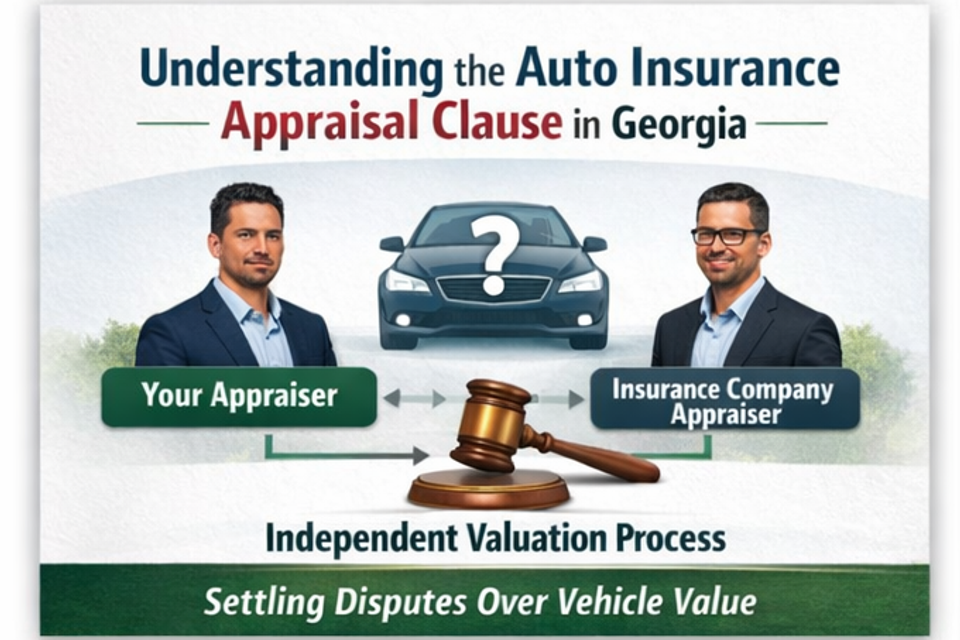
Auto insurance appraisal clause process showing independent appraisers resolving a vehicle valuation dispute in Georgia
The appraisal clause allows independent appraisers to resolve disagreements about vehicle value.

When It Applies, How the Process Works, and When It Helps Most

After an accident, disagreements about vehicle value are more common than most drivers expect. When an insurance company declares a vehicle a total loss or disputes the cost of repairs, the number offered in the settlement may not always reflect the real market value of the vehicle.

Many auto policies contain a provision called the appraisal clause, which is designed specifically to resolve disagreements about the amount of loss.

In Georgia, this clause can be a useful tool when both sides agree the claim is covered but cannot agree on the value of the loss. Instead of continuing a back-and-forth negotiation, the appraisal clause creates a structured process where qualified appraisers evaluate the loss and determine the appropriate amount.

For drivers across Augusta, Central Georgia, Metro Atlanta, Athens, Gainesville, Rome, and Ringgold, understanding how this clause works can make a significant difference when a claim dispute develops.
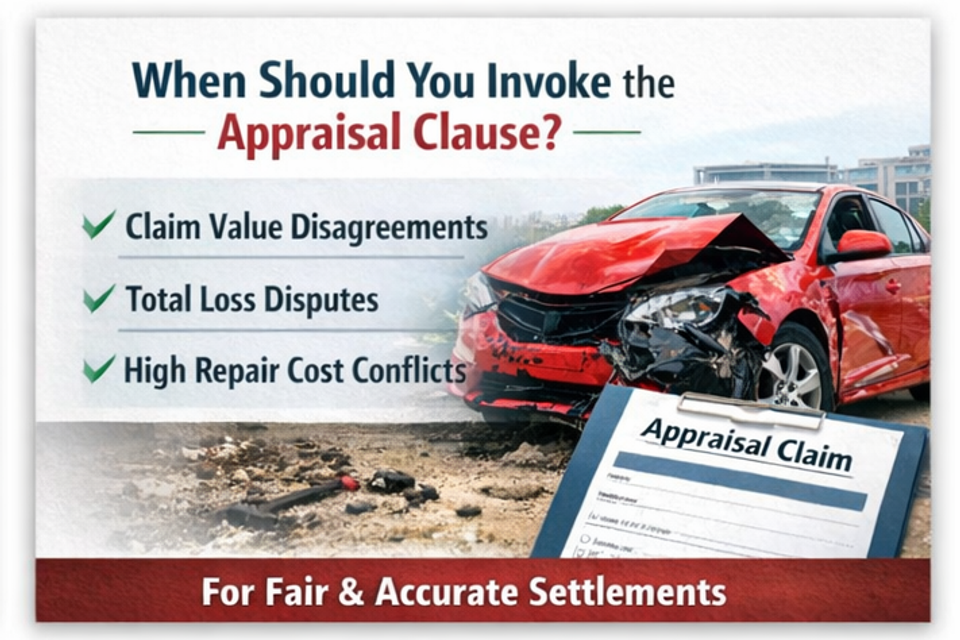
Situations when the auto insurance appraisal clause may apply in Georgia including total loss and repair cost disputes
The appraisal clause may help when drivers and insurers disagree on total loss value or repair costs.

When the Appraisal Clause Applies

The appraisal clause generally applies when the disagreement centers on how much the loss is worth, not whether the policy covers the claim.

This commonly occurs in situations such as:

• Total loss claims where the insurer’s valuation appears too low
• Disputes over the actual cash value (ACV) of a vehicle
• Disagreements about repair estimates after a collision
• Situations where comparable vehicles used in the valuation appear inaccurate

In these cases, both sides acknowledge that a loss occurred. The dispute is simply over the number attached to it.

The appraisal clause provides a mechanism for determining that number through independent review rather than continued negotiation.

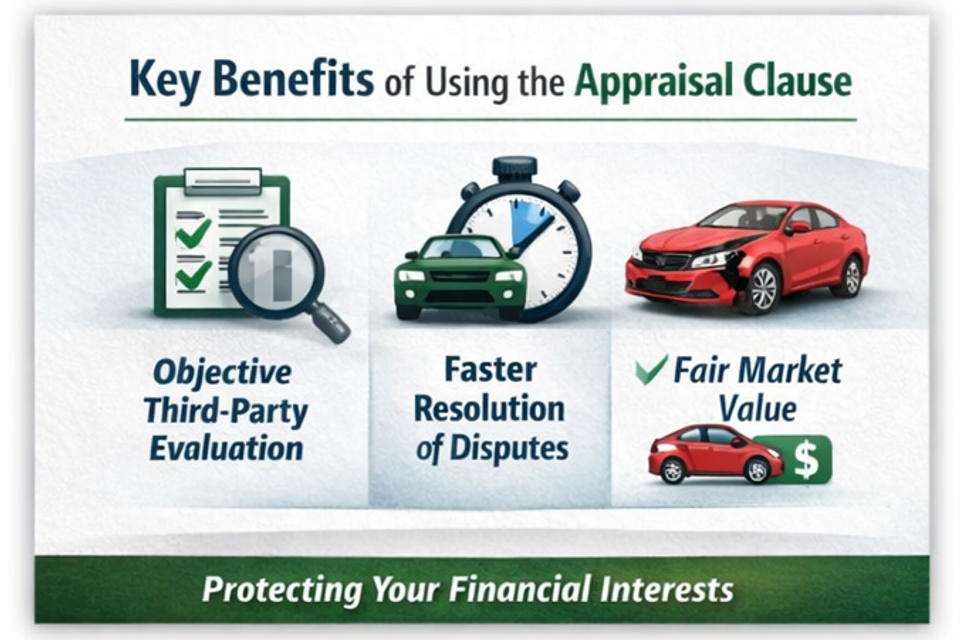
Benefits of the auto insurance appraisal clause including independent evaluation and fair vehicle valuation
Independent appraisal reviews can help resolve valuation disputes more objectively.

How the Appraisal Process Works

Although the exact wording can vary between insurance companies, the process usually follows a similar structure.


1. A written request for appraisal


Either the policyholder or the insurer can request appraisal when they cannot agree on the amount of loss.
 

2. Each side selects an appraiser


The policyholder selects an independent appraiser, and the insurance company selects its own appraiser.
 

3. The appraisers review the loss


Both appraisers examine the available documentation. This may include vehicle valuations, repair estimates, comparable vehicle listings, option packages, mileage data, and condition adjustments.
 

4. An umpire may be selected


If the two appraisers cannot agree on the value, they select a neutral third party called an umpire.
 

5. Any two of the three can determine the amount


If both appraisers agree on a value, that becomes the amount of loss.
If they disagree, the umpire reviews the evidence and a decision agreed upon by any two of the three becomes binding for the valuation.

Each party typically pays for its own appraiser, while the cost of the umpire is shared.
Request a Consultation
Independent vehicle appraisal support helping Georgia drivers challenge inaccurate insurance valuations
Independent documentation can help clarify vehicle value disputes with insurers.

When the Appraisal Clause Helps Most

The appraisal clause tends to be most helpful when the dispute is clearly about valuation accuracy.

Examples often include:

• Missing factory options affecting vehicle value
• Incorrect trim levels used in the valuation report
• Comparable vehicles that are not truly comparable
• Mileage adjustments that appear incorrect
• Condition adjustments that do not reflect the vehicle’s actual state

When disputes revolve around these types of issues, the appraisal process can shift the discussion from opinion to evidence.

Instead of arguing about numbers, the focus moves to documentation, comparable vehicles, and accurate valuation methods.


When the Appraisal Clause May Not Resolve the Dispute


While appraisal can help resolve valuation disagreements, it does not address every type of insurance dispute.

It typically does not determine:

• Whether the policy covers the loss
• Liability questions
• Allegations of fraud or misrepresentation
• Legal issues unrelated to the value of the loss

Those issues generally require other legal processes.

Understanding whether a dispute is about coverage or valuation is an important first step before considering appraisal.

How Independent Documentation Helps Level the Field

Independent documentation often becomes important before or during an appraisal dispute.


A detailed review can help identify issues such as:

• Missing vehicle options
• Incorrect trim or configuration
• Weak or inaccurate comparable vehicles
• Market data that does not reflect the local Georgia market
• Condition adjustments that appear excessive

By organizing these details into a clear report, the appraisal process becomes more focused on facts rather than assumptions.


Serving Georgia Drivers Statewide


Collision Safety Consultants of Central Georgia works with drivers throughout Augusta and Central Georgia as well as Metro Atlanta, Athens, Gainesville, Rome, and Ringgold.

Local vehicle markets can vary significantly across Georgia, and valuation disputes often depend on understanding the realities of the regional market.

Proper documentation helps ensure that those factors are accurately reflected when vehicle values are evaluated.


If a Claim Dispute Reaches the Appraisal Stage


The appraisal clause can be a valuable tool when the disagreement centers on the amount of the loss.

But like any contractual process, it works best when the documentation supporting the valuation is clear and well organized.

If the numbers being presented do not appear to match the vehicle you owned or the local market where you live, the situation deserves careful review before accepting a settlement.

Free consultations are available to help determine whether a valuation dispute may benefit from further documentation or independent review.
Request a Consultation

Auto Insurance Appraisal Clause
Questions & Answers in Georgia

An appraisal clause is a provision found in many auto insurance policies that allows disagreements about the amount of loss to be resolved through independent appraisers rather than ongoing negotiations between the insurer and policyholder.

The appraisal clause is typically used when both sides agree the claim is covered but disagree on the value of the loss. This often occurs in total loss claims or repair cost disputes.

No. The appraisal process normally determines only the amount of the loss. Coverage issues, liability disputes, or allegations of bad faith are typically addressed through other legal or contractual processes.

The policyholder selects one appraiser and the insurance company selects another. If those two appraisers cannot agree on the value, they select a neutral third party known as an umpire.

Typically each party pays for its own appraiser, while the cost of the umpire is shared. The exact structure depends on the language of the insurance policy.

Request a Free Claim Review

Get clear answers about your vehicle valuation and the next steps available.
Request a Free Consultation
CSC Central GA Floating Menu