Skip to content

Diminished Value in Georgia

C35afdb9 8149 40e7 af0c 6e4a000917bd

Diminished Value in Georgia: What It Is, Who Qualifies, and How the Claim Works

After an accident, most drivers focus on getting their vehicle repaired and back on the road. Once the repairs are complete, it is easy to assume the situation is behind you. But in reality, another part of the loss often remains.

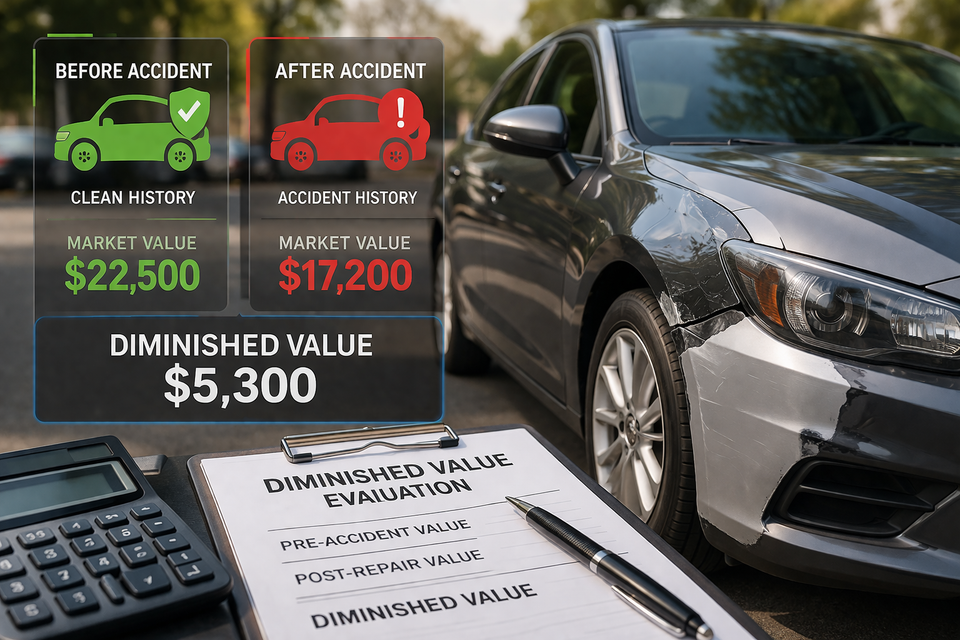
A vehicle that has been involved in an accident carries a history that follows it long after the repairs are finished. Buyers, dealerships, and even automated valuation systems take that history into account. As a result, the vehicle’s market value is typically reduced, even when the repairs are done correctly.

This reduction is known as diminished value. It represents the difference between what your vehicle was worth before the accident and what it is worth afterward.

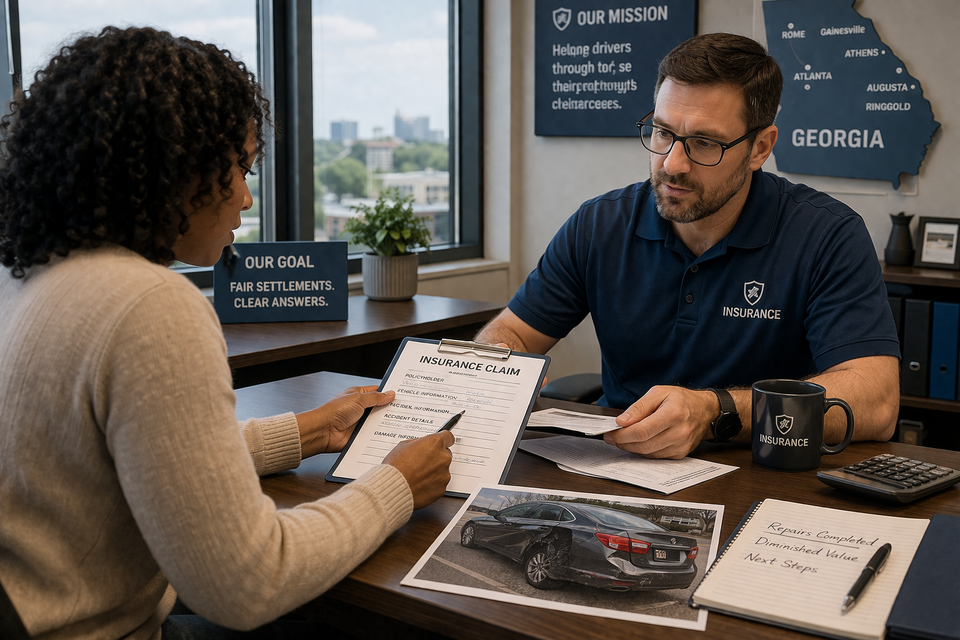
In Georgia, diminished value is recognized as part of a property damage claim under the right circumstances. For drivers across Augusta, Central Georgia, Metro Atlanta, Athens, Gainesville, Rome, and Ringgold, understanding this concept can make a meaningful difference in the outcome of a claim.

The key issue is not whether the vehicle was repaired. The issue is whether its value was fully restored. In most cases, it is not.
6b43ee87 956d 4ede 9211 2525bd1d1282

Who Qualifies for a Diminished Value Claim in Georgia

Georgia is one of the more favorable states when it comes to diminished value claims, but not every situation qualifies. The ability to pursue a claim depends on how the accident occurred and which insurance policy is involved.

In most cases, a diminished value claim applies when you were not at fault and are pursuing compensation through the at-fault driver’s insurance company. This is known as a third-party claim. Georgia law generally allows recovery for the loss in value under these circumstances.

The vehicle itself must also have measurable market value prior to the accident. Factors such as age, condition, mileage, and overall desirability all play a role in whether diminished value is significant enough to pursue.

First-party claims, where you attempt to recover diminished value through your own insurance policy, are often more limited. Many policies restrict or exclude this type of recovery unless specific provisions apply.

Because of this, timing and awareness matter. Many drivers only learn about diminished value after repairs are complete, at which point the opportunity to properly document and support the claim may already be more difficult.

Understanding qualification early helps ensure the claim is handled with the right approach from the beginning.
Request a Free Consultation
8c537be9 bf65 44ae 9a9b ce12ff001d1c

How the Claim Works and Why Many Offers Fall Short

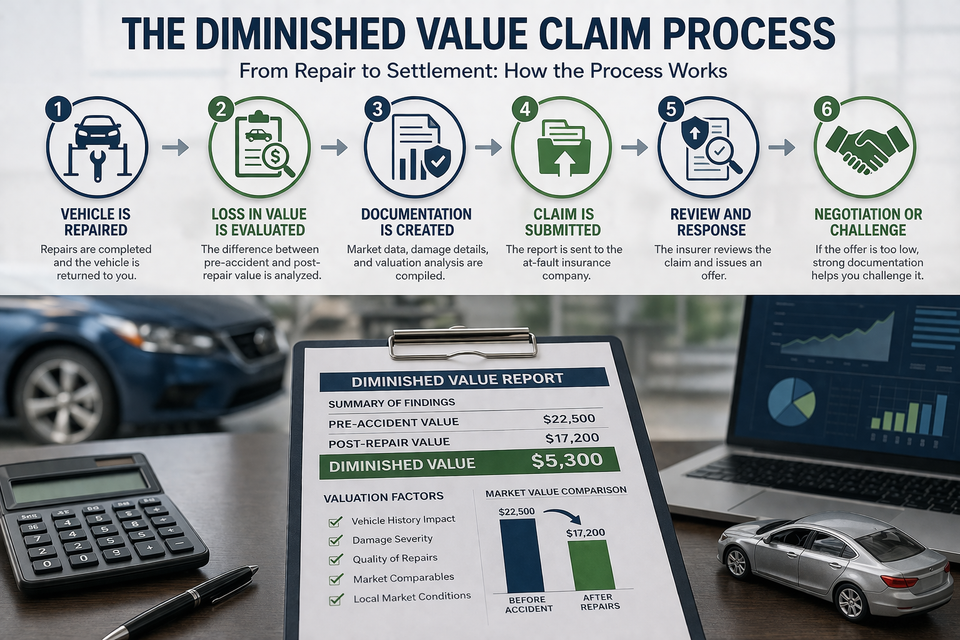
A diminished value claim typically begins after the vehicle has been repaired. At that point, the focus shifts from physical damage to financial impact.

The process generally involves evaluating the vehicle’s pre-accident value, comparing it to its post-repair market position, and documenting the difference. That information is then submitted to the at-fault insurance company for review.

While this sounds straightforward, the way the value is calculated often becomes the point of disagreement.

Many insurance companies rely on formula-based systems to estimate diminished value. These systems are designed to create consistency, but they do not always reflect real-world market behavior. In some cases, they may limit the amount of loss regardless of the actual impact on resale value.

Common issues that affect diminished value offers include:

• Use of generalized formulas instead of market-based analysis
• Limited or weak comparable vehicle data
• Failure to account for structural or significant repairs
• Ignoring how accident history affects buyer perception

The result is often an offer that does not align with what the vehicle would actually bring in the marketplace.

When this happens, the discussion shifts from whether diminished value exists to how much it truly is.
B02becc7 6c7e 47b6 a0bc 62209bdb66a6

How Independent Documentation Helps Level the Field

When a diminished value claim is based on limited or formula-driven data, the outcome is often predictable. The insurer presents a number, and the driver is left to decide whether to accept it or attempt to challenge it.

Independent documentation changes that dynamic.

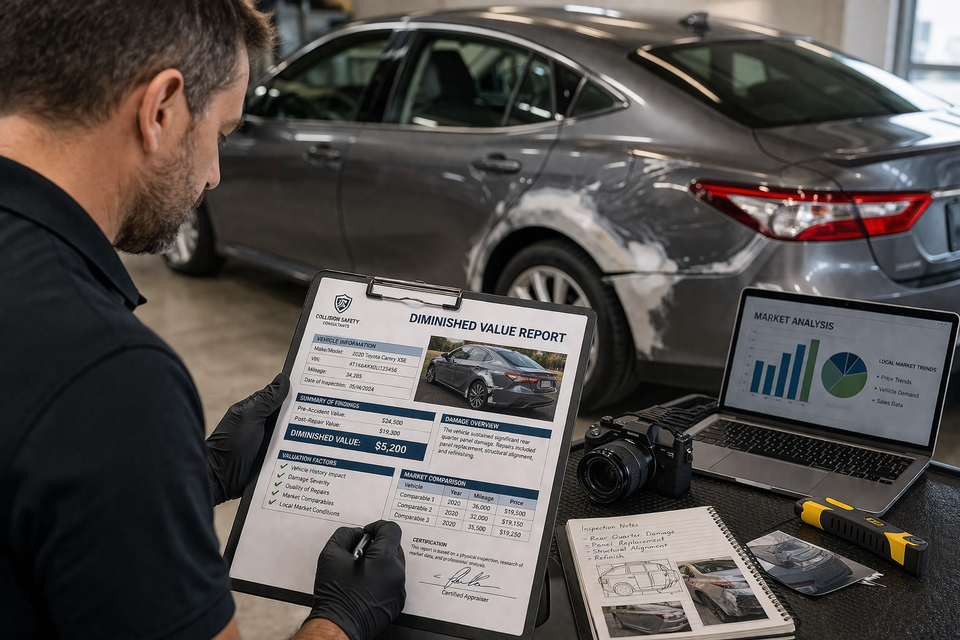
A properly prepared diminished value report focuses on real market conditions rather than preset formulas. It examines the specific vehicle, the nature of the damage, the quality and type of repairs, and how similar vehicles are performing in the local market.

This type of evaluation provides:

• A clearer picture of the actual loss in value
• Verification of whether the insurer’s figures are supported
• Market-based comparables relevant to the region
• Structured findings that can be presented in a claim dispute

In areas like Augusta and across Central Georgia, local market differences can significantly influence vehicle value. A one-size-fits-all calculation often misses those nuances.

Independent documentation brings those factors into focus and provides a stronger foundation for discussion.


Serving Drivers Across Georgia


Collision Safety Consultants of Central Georgia works with drivers throughout Augusta and Central Georgia, as well as Metro Atlanta, Athens, Gainesville, Rome, and Ringgold.
The goal is simple: provide clear, independent documentation that helps drivers understand their position and pursue fair outcomes after an accident.


Request Your Inspection or Report Today


Get clear answers and next steps fast.
Request a Free Consultation

Diminished Value in Georgia
Questions & Answers

Diminished value is the loss in your vehicle’s market value after an accident, even after the repairs have been completed. A vehicle with an accident history is often worth less than a similar vehicle with a clean history.

In most cases, Georgia drivers may qualify when they were not at fault for the accident and are pursuing the claim against the at-fault party’s insurance company. The vehicle must also have measurable pre-loss market value and accident-related damage.

After the vehicle is repaired, the loss in market value is evaluated and documented. That documentation is then submitted to the at-fault insurance carrier as support for a diminished value claim. The insurer reviews the claim and may issue an offer, which can be accepted or challenged.

Yes. Georgia is one of the better states for diminished value claims, but that does not mean the insurance company will automatically offer a fair amount. Proper documentation is often needed to support the true loss in value.

No. If the offer does not reflect the real market impact of the accident, it can be challenged with stronger supporting evidence, including an independent diminished value report.

Weak comparable vehicle data, formula-based calculations, failure to account for structural damage, and undervaluing the severity of repairs can all reduce the amount an insurer offers on a diminished value claim.

Request a Free Claim Review

Get clear answers about your vehicle valuation and the next steps available.
Request a Free Consultation
CSC Central GA Floating Menu